The battery industry is at a critical inflection point: acute supply chain concentration, persistent ex-China scaling woes, and misalignment of R&D roadmaps all amidst increasing geopolitical tensions, unprecedented AI-driven electrical infrastructure growth, and a slowdown in EV adoption. It is imperative for the industry to refocus strategy and catalyze action with Security, Pragmatism, and Scale.
To answer the moment, Stanford is convening a first-of-a-kind multi-day summit focused on translating strategy to action. From senior industry voices to frontline doers, this Battery Summit will reshape the next decade of U.S. battery strategy.
Choi Joo-sun is the President and CEO of Samsung SDI. He is accelerating research and development to diversify products. He is also focusing on expanding the customer base. Born May 21, 1963, he graduated from Daedong High School in Busan and the Department of Electronic Engineering at Seoul National University. He earned both his master’s and doctoral degrees in electronic engineering from KAIST. He began his career at Hynix Semiconductor as a DRAM design researcher. He later moved to Samsung Electronics, where he worked as a principal researcher in the ATD team of the Memory Division. He went on to serve as Head of DRAM Development at Samsung Electronics’ Memory Division and Head of North America for the Device Solutions (DS) Division, before being appointed President and CEO of the Large Display Business at Samsung Display in 2020. In 2024, he was appointed President and CEO of Samsung SDI. As a technology expert with an engineering background, he has been brought in as a 'relief pitcher' to overcome the chasm. Within Samsung, he led the growth of both the semiconductor and display businesses. He is a full member of the National Academy of Engineering of Korea and serves as the chairman of the Korea Display Industry Association.
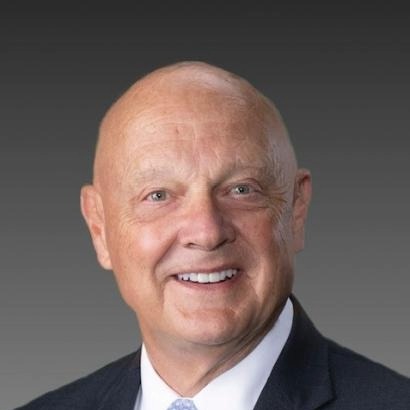
Kurt Kelty serves at GM’s Vice President of Battery Cell and Pack. Appointed to his role in February 2024, Kelty leads GM’s comprehensive battery technology strategy and lifecycle approach, encompassing research and development (R&D), battery cell evaluation and selection, battery pack design and commercialization, and sustainability initiatives including end-of-life solutions.
A globally recognized expert in energy storage technology, Kelty brings over 30 years of experience across consumer electronics, electric vehicles, and the broader battery value chain, including roles as a material supplier, cell maker, and end-user.
Kelty began his career in lithium-ion batteries in 1993 with Panasonic, where he initially sold rechargeable lithium-ion batteries for portable applications. During his tenure, he founded and led Panasonic’s Silicon Valley battery research lab, forging key R&D partnerships between Panasonic and U.S.-based developers of batteries and fuel cells.
In 2006, Kelty joined Tesla, where he spent 11 transformative years leading the battery cell development team. He spearheaded supplier selection, quality control, technical exchanges, and commercial negotiations with global battery cell manufacturers and startups. Kelty played a pivotal role in bringing rechargeable battery production back to the U.S. with the establishment of Tesla’s first Gigafactory, the world’s largest lithium-ion battery factory.
After Tesla, Kelty served as Vice President at Sila, leading the commercialization of advanced silicon anode materials. His work focused on innovations in high-energy density and fast-charging solutions for electric vehicles.
Kelty is a graduate of Swarthmore College with a bachelor’s degree in biology and a graduate of Stanford University, where he earned his Master of Science through Stanford Business School’s Sloan Program. Kelty is the author of 16 patents in the U.S. and Japan.
In addition to his professional accomplishments, Kelty has served as a Board Member for Auto Motive Power (acquired by Ford) and as an Advisory Board Member for BP and other energy-focused organizations.
Admiral James O. Ellis Jr. is Annenberg Distinguished Visiting Fellow at the Hoover Institution, where he oversees both the Global Policy and Strategy Initiative and the George P. Shultz Energy Policy Working Group. He retired from a 39-year career with the US Navy in 2004. He has also served in the private and nonprofit sectors in areas of energy and nuclear security.
A 1969 graduate of the US Naval Academy, Ellis was designated a naval aviator in 1971. His service as a navy fighter pilot included tours with two carrier-based fighter squadrons and assignment as commanding officer of an F/A-18 strike fighter squadron. In 1991, he assumed command of the USSAbraham Lincoln, a nuclear-powered aircraft carrier. After selection to rear admiral, in 1996, he served as a carrier battle group commander, leading contingency response operations in the Taiwan Strait.
His shore assignments included numerous senior military staff tours. Senior command positions included commander in chief, US Naval Forces, Europe, and commander in chief, Allied Forces, Southern Europe, during a time of historic NATO expansion. He led US and NATO forces in combat and humanitarian operations during the 1999 Kosovo crisis.
Ellis’s final assignment in the navy was as commander of the US Strategic Command during a time of challenge and change. In this role, he was responsible for the global command and control of US strategic and space forces, reporting directly to the secretary of defense.
After his naval career, he joined the Institute of Nuclear Power Operations (INPO) as president and chief executive officer. INPO, sponsored by the commercial nuclear industry, is an independent, nonprofit organization whose mission is to promote the highest levels of safety and reliability in the operation of commercial nuclear electric generating plants. He retired from INPO in 2012.
Ellis is also the former board chair of Level 3 Communications and served on the board of Lockheed Martin Corporation and Dominion Energy. In 2006, he became a member of the Military Advisory Panel to the Iraq Study Group. In 2009, he completed three years of service on the President’s Intelligence Advisory Board. A former board chair of the nonprofit Space Foundation, in 2018 he was appointed chairman of the Users’ Advisory Group to the Vice President’s National Space Council, where he served until 2022.
Ellis holds a master’s degree in aerospace engineering from the Georgia Institute of Technology. He was inducted into the school’s Engineering Hall of Fame in 2005. He completed US Navy Nuclear Power Training and was qualified in the operation and maintenance of naval nuclear propulsion plants. He is a graduate of the Navy Test Pilot School and the Navy Fighter Weapons School (Top Gun). In 2013, Ellis was elected to the National Academy of Engineering for “contributions to global nuclear safety.”

-1.png?width=1165&height=243&name=STEER-Logo-Parallel-Light%20(1)-1.png)

-1.png?width=120&height=25&name=STEER-Logo-Parallel-Light%20(1)-1.png)